
Loading, Listing, and Caching FX
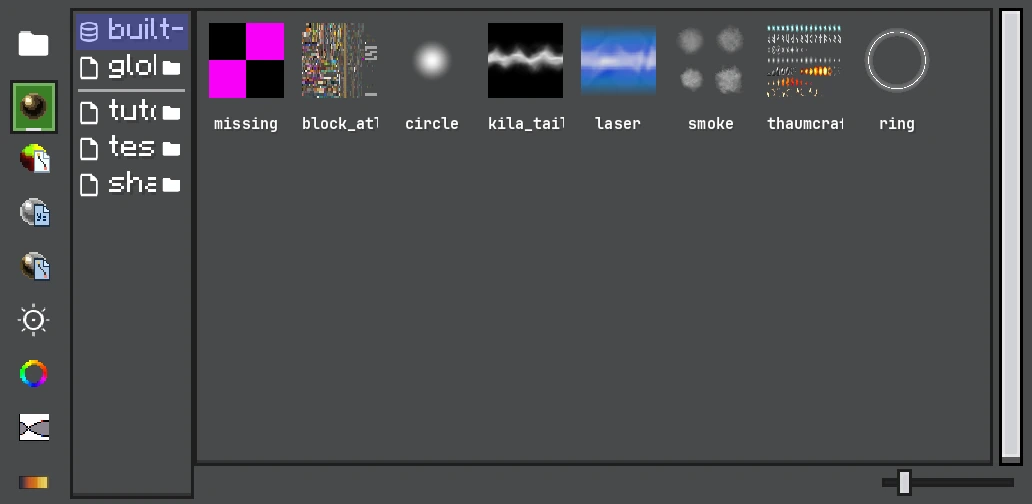
FX lookup and editor resource providers ultimately resolve namespaced files from the active resource stack.
FXHelper resolves .fx files through Minecraft's client resource manager.
ID to Resource Path
FX id:         mymod:combat/hit
resource:      assets/mymod/fx/combat/hit.fx
Do not include fx/ or .fx in the ResourceLocation passed to the API.
ResourceLocation id = ResourceLocation.fromNamespaceAndPath("mymod", "combat/hit");
FX fx = FXHelper.getFX(id); // cached; null when loading/deserialization fails
getFX(id, false) bypasses the definition cache for that call. It is intended for diagnostics or special reload flows, not per-tick playback.
Call getFX on the render thread. The first call for an id reads the file and builds the definition on the spot, which can compile shaders. The rest of what the first play needs (shader variants, textures, the effects its sub-emitters spawn) loads during that play. To move all of this out of gameplay, preload the effect.
FX Instances
Since 2.2.9An .fx that contains FX instances is baked when it is read: getFX loads each source by id and places its objects into the definition. A runtime then holds ordinary objects, and findObject finds placed objects by their names.
- The sources must be loadable by id at runtime. A plain
.fxexport references them; an.fxpackexport packs them. - A missing source places nothing. The instance object stays in the effect, empty, and the log names the missing id.
- Sources are cached with the effects that place them and are forgotten together with them.
Listing
Cached resource listing 2.2.4List<ResourceLocation> effects = FXHelper.listAllFX();The immutable returned list includes effects from mod jars, ordinary resource packs, the editor's injected resource directory, and mounted .fxpack files. It is sorted by namespace then path and cached because enumerating every pack is expensive.
Cache Invalidation
int definitionsRemoved = FXHelper.clearCache();Resource reload automatically clears both the definition cache and listing cache. clearCache() does not destroy already-created runtimes; those own their copied runtime object data and continue until finished or destroyed.
FXHelper.invalidate(List.of(id));invalidate(ids) forgets only the given effects, plus every effect that places one of them as an FX instance, and drops the listing cache. Every other loaded effect stays cached. The next getFX reads the forgotten effects again. Both methods increase FXHelper.generation(); see Reloads and the Cache for what this means for preloaded effects.
Load failure returns null and writes the resource id/path plus exception to the Photon logger. Treat null as a normal missing/broken-resource outcome—especially when an optional resource pack is absent.
FX Pack Mounting
Mounted FX Packs are lowest-priority hidden client resource packs. Their assets/<namespace>/fx/... entries behave exactly like jar or resource-pack entries for getFX() and listAllFX(). Mods, resource packs and the editor's resource directory all have a higher priority, so whichever of them provides the same id wins.
Photon mounts:
.fxpackfiles placed directly in<gameDir>/photon/fxpacks/. Files in subfolders are not loaded..fxpackfiles and unzipped pack folders underfxpacks/at the root of a mod jar.
A new pack file is found on the next resource reload (F3+T), like any resource pack.
Changed 2.2.9Since 2.2.9 the editor rewrites a pack that is already mounted in place. Effects exported into it, or removed from it, take effect right away, without a reload: Photon forgets only the changed effects, so the next getFX reads the new version, and kept effects are preloaded again in the background. Runtimes that are already playing keep the definition they were created from. See Distribution and FX Packs for the editor side.
Safe Holder Pattern
Cache the ResourceLocation or loaded FX definition when useful, but do not cache one FXRuntime forever without checking isValid(). Definitions survive world changes; emitted runtime particles do not.