
Rendering, Materials, Meshes, and Models
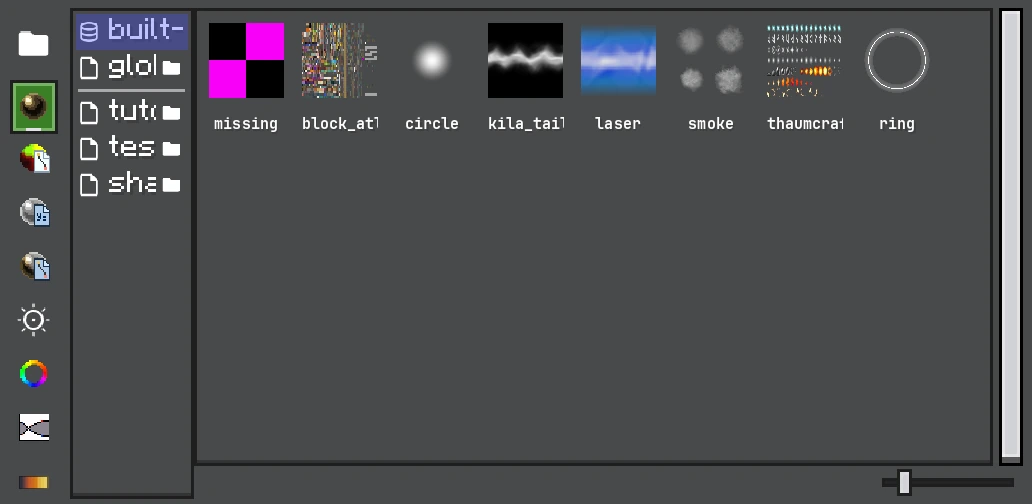
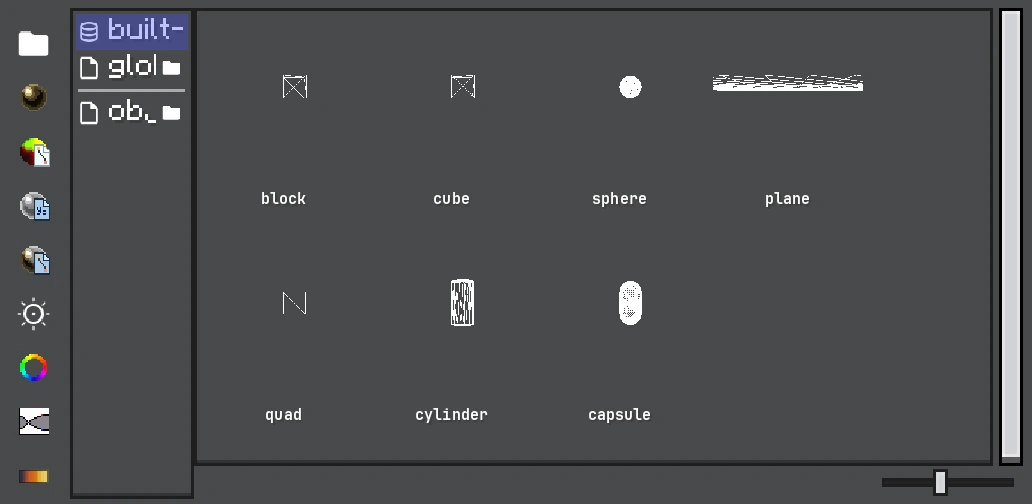
A renderer combines one of these materials with tile geometry, a mesh, or a model source.
Simulation produces particle state. Renderer settings choose geometry and draw order; materials choose shader, texture, depth, and blending.
Renderer Controls
| Setting | Purpose |
|---|---|
| materials | One or more material slots used by the geometry. |
| layer | Opaque or translucent pipeline. |
| cull box | Optional per-emitter bounds for frustum culling. |
| order in layer | Stable ordering between Photon passes. |
| vertex sorting mode | Sort translucent geometry where supported. |
| composite mode | Choose when deferred FX is composited. |
| custom mask | Write named mask/depth information for post effects. |
Material Types
- Texture Material: texture, discard threshold, HDR multiplier/mode, and pixel-art options.
- Sprite Material: uses a registered Minecraft particle sprite.
- Shader Graph Material: compiles a graph resource into the particle shader variants.
- Custom Shader Material: loads a Core Shader and exposes curve/gradient samplers.
- Block Atlas: texture material bound to Minecraft's block atlas.
See Material System for shader-facing details.
Tile and Model Rendering
Tile mode renders camera-facing or configured-orientation quads. Model mode renders a mesh for every particle and supports wireframe/shaded choices, multiple materials, and block UVs where the model source provides them.
Mesh Sources
Universal model sources since 2.2.0| Source | Notes |
|---|---|
| Built-in primitive | Plane, quad, cube, sphere, cylinder, capsule. |
| OBJ | Direct .obj resource with optional V flip. |
| Minecraft JSON model | Loads model geometry and texture UV layout. |
| Resource Mesh | Reusable .mesh.nbt managed by the editor. |
Shape and Model renderer inputs share IModelSource/MeshData, so one resource can drive both emission and visible geometry.
GPU Instancing
Instanced rendering uploads per-particle records and draws many particles in one call. Equal effective render passes merge into the same batch. A per-emitter material/renderer Runtime override lazily creates a compatible override pass; clearing all overrides returns to the shared fast path.
Transparency and Depth
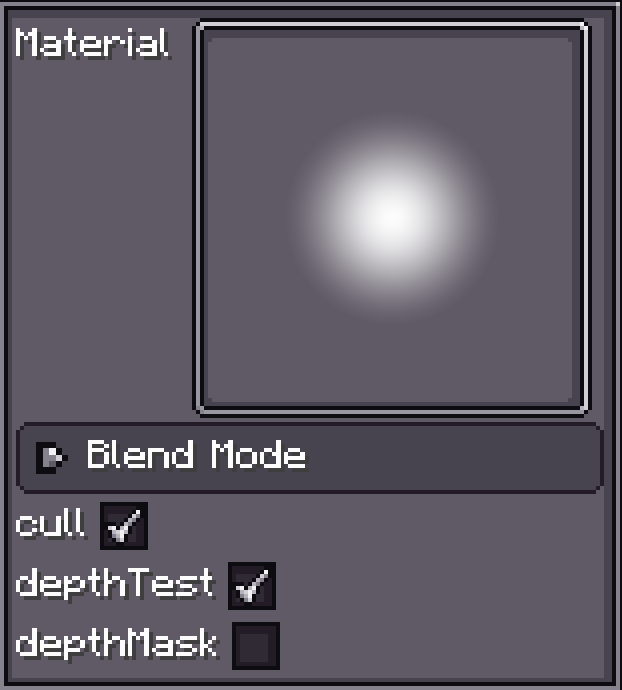
Depth test prevents particles behind geometry from showing. Depth mask writes particle depth and can cause later translucent effects to disappear if used carelessly. Blend mode must match the shader's color convention; HDR/bloom paths use premultiplied-aware composition.